Best Practices for Using Structural Steel Deck on Wood Supports
Welcome to the brand-new Next Level Decking blog—your go-to resource for industry insights, engineering solutions, and the real math behind modern commercial construction.
Best Practices for Using Structural Steel Deck on Wood Supports
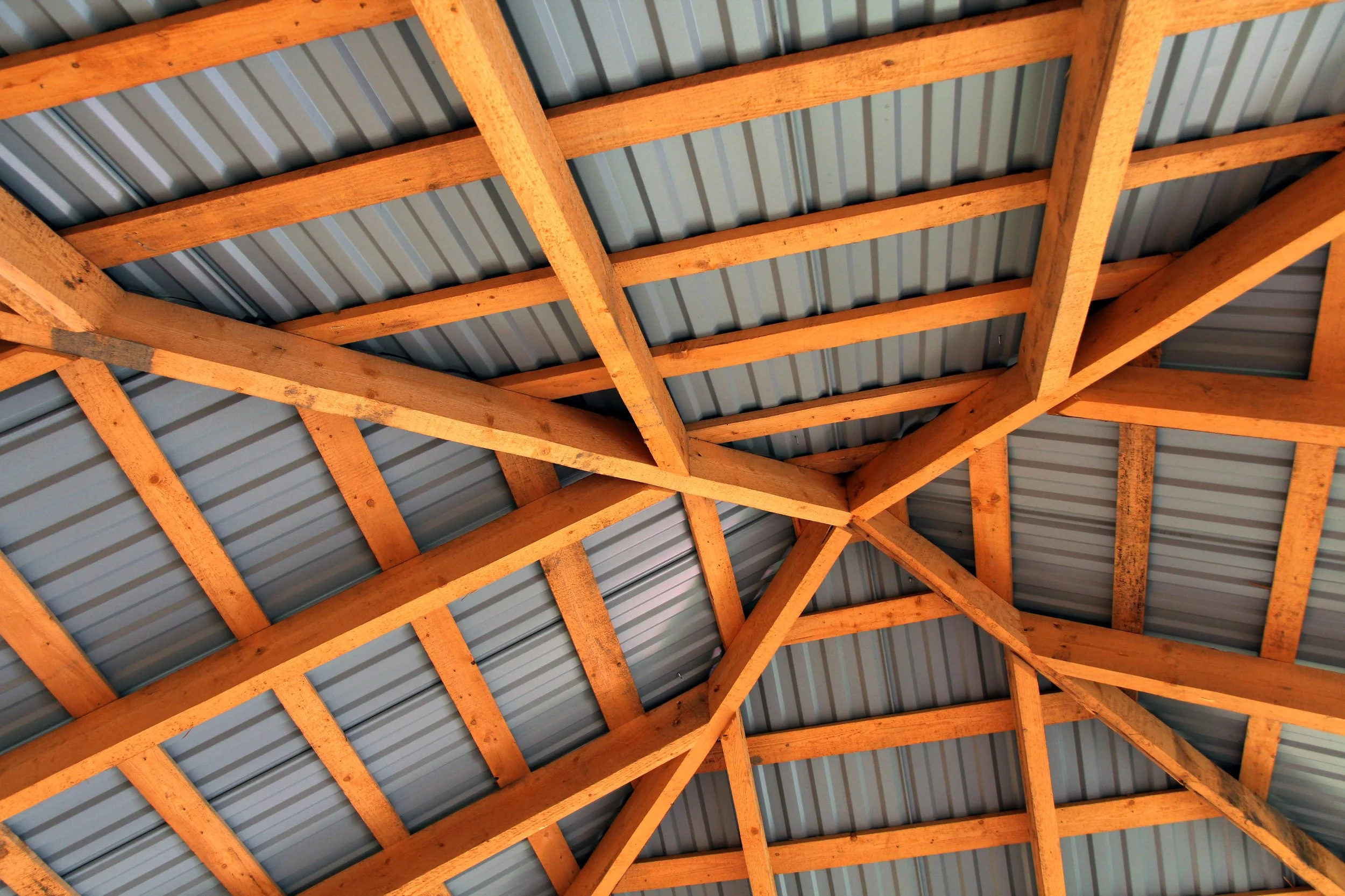
Structural steel deck has long been paired with steel framing, but the growing popularity of mid-rise and multi-family hybrid construction has significantly increased its use over wood supports. Retrofit projects on existing barrel vault and wood truss systems in older commercial buildings have further expanded these applications. Architects and owners often embrace this hybrid approach to create a striking aesthetic contrast between exposed wood framing and the clean, industrial look of steel deck.
The International Building Code (IBC) and supporting standards, including AISI-S310, explicitly recognize steel deck diaphragms on wood supports. However, these systems introduce unique engineering and installation challenges that must be carefully addressed to ensure structural performance, constructability, and code compliance. As hybrid steel-deck-over-wood systems become more common, clear best practices for design and installation are essential.
Why Use Steel Deck on Wood Supports?
Steel deck offers several performance advantages over OSB and plywood sheathing when installed on wood supports:
Superior Diaphragm Strength: Steel deck delivers high in-plane shear capacity, efficiently transferring wind and seismic loads to the lateral force-resisting system.
Longer Spans: Corrugated steel deck can span greater distances than plywood or OSB, reducing the number of framing members required.
Improved Fire Performance: As a noncombustible substrate, steel deck can enhance the fire resistance of the assembly compared to all-wood systems.
Better Wind Uplift Resistance: A properly fastened steel deck provides a continuous, mechanically attached system that often outperforms traditional wood sheathing under wind uplift, especially with optimized fastener patterns
Key Design and Installation Considerations
1. Support Connections (No Welds or Power-Actuated Pins) The biggest difference when installing steel deck over wood supports is how you fasten the deck to the supports. Two of the three traditional steel-to-steel connections (welding and PAFs aka shot pins) cannot be used. In place of welds or pins, screws are the connection of choice for steel deck to wood supports, but they must be installed and specified in accordance with the various standards. They should be code-approved wood screws specifically designed for steel-to-wood connections, installed through the deck flutes into the framing members. Diaphragm capacity is often governed by fastener embedment into the wood, so screw size, spacing, and penetration depth must be calculated using NDS yield limit equations and the diaphragm provisions in AISI-S310.
2. Sidelap Connections Side-lap connections between deck sheets must also use approved methods such as button punches, screws or other mechanical sidelap fastening tools at the specified spacing to maintain diaphragm continuity. A Top Seam Weld can be used for the sidelap connection also, but typically is not used on wood supports due to the possible fire danger.
3. Vertical Loads and Bearing Design of the steel deck for gravity loads depends primarily on deck section properties and span conditions and is largely independent of the support material. However, proper bearing is critical. The IBC and SDI standards specify a minimum bearing length of .75 inch. In practice, a minimum of 2 inches of end bearing (net of any edge rounding or chamfers) is strongly recommended for constructability and reliable fastening.
Roof Deck: Sheets may lap over supports, allowing shared bearing on members 2 inches or wider.
Composite Deck: Sheets are typically butted at supports, often requiring a minimum 4-inch-wide support to provide 2 inches of bearing per sheet.
For uplift and load reversal, the Engineer of Record (EOR) must verify fastener pull-out and pull-over capacities per AISI-S100 and NDS, in addition to deck limit states.
4. Diaphragm Design Diaphragm performance over both wood and steel supports is heavily influenced by the connection details. Unlike steel supports, fastener behavior in wood (shear, withdrawal, and bearing) often governs both strength and stiffness. Designers should follow AISI-S310 (as referenced in the IBC) and consult the Steel Deck Institute’s Diaphragm Design Manual (DDM04). Published diaphragm tables from various manufacturers and SDI are typically based on steel supports and will require adjustment or project-specific evaluation (i.e. calculations by the EOR) for wood-supported systems. Additional flexibility introduced by wood framing and fastener slip must be accounted for when calculating overall diaphragm stiffness and load distribution.
Installation Best Practices
Ensure uniform bearing and sufficient support width to prevent wood splitting or edge failure.
Install fasteners with the exact specified type, spacing, and minimum embedment.
Complete all side-lap connections before proceeding.
Verify wood members are adequately designed per the NDS to resist concentrated forces from fasteners (bearing, withdrawal, and splitting checks).
Check for the presence of incompatible materials such as pressure-treated lumber, which may cause accelerated corrosion of steel deck when in direct contact.
Refer to SDI Technical Note No. 11 for additional guidance on material compatibility and corrosion protection considerations.
Coordination is Critical
Successful projects require early and ongoing collaboration between the structural engineer, steel deck supplier/manufacturer, and wood framing contractor. Clear fastener schedules, shop drawings, and field verification are essential. By following these best practices, hybrid steel deck over wood support systems can deliver excellent structural performance, aesthetic appeal, and construction efficiency while meeting code requirements.
References
International Code Council (ICC). International Building Code (IBC), 2024 Edition.
American Wood Council (AWC). National Design Specification (NDS) for Wood Construction, 2024 Edition.
Steel Deck Institute (SDI) / AISI. ANSI/AISI S310-23: North American Standard for the Design of Profiled Steel Diaphragm Panels (with Supplement 1).
Steel Deck Institute (SDI). Diaphragm Design Manual (DDM04), 4th Edition 2015.
Steel Deck Institute (SDI). ANSI/SDI SD-2022: Standard for Steel Deck (with Supplement 1).
Steel Deck Institute (SDI). Technical Note No. 11: Corrosive Materials in Contact with Steel Deck.
Disclaimer: This information is provided as general guidance only and is subject to review, verification, and approval by the Designer of Record. All final design and installation decisions remain the responsibility of the Engineer of Record in accordance with applicable codes and project requirements.